
About Parc du Cinquantenaire
The Parc du Cinquantenaire (pronounced [paʁk dy sɛ̃kɑ̃t(ə)nɛːʁ]; French for 'Park of the Fiftieth Anniversary') or Jubelpark (pronounced [ˈjybəlˌpɑr(ə)k]; Dutch for 'Jubilee Park') is a large urban public park of 30 ha (74 acres) in the easternmost part of the European Quarter in Brussels, Belgium. Most buildings of the U-shaped complex that dominate the park were commissioned by the Belgian government under the patronage of King Leopold II for the 1880 National Exhibition commemorating the 50th anniversary of the Belgian Revolution.
The Parc du Cinquantenaire (pronounced [paʁk dy sɛ̃kɑ̃t(ə)nɛːʁ]; French for 'Park of the Fiftieth Anniversary') or Jubelpark (pronounced [ˈjybəlˌpɑr(ə)k]; Dutch for 'Jubilee Park') is a large urban public park of 30 ha (74 acres) in the easternmost part of the European Quarter in Brussels, Belgium. Most buildings of the U-shaped complex that dominate the park were commissioned by the Belgian government under the patronage of King Leopold II for the 1880 National Exhibition commemorating the 50th anniversary of the Belgian Revolution. During successive exhibitions, more structures were added to the site. The centrepiece memorial arch, known as the Cinquantenaire Arch (French: Arc du Cinquantenaire; Dutch: Triomfboog van het Jubelpark), was erected in 1905, replacing a previous temporary version of the arcade by Gédéon Bordiau.
Отзиви на пътешественици
Все още няма публични отзиви — бъдете първият, който оцени това място.
Все още няма публични отзиви — бъдете първият, който оцени това място.
Наблизо в този град
Combine Parc du Cinquantenaire with other landmarks in Brussels.

The Grand-Place (French, pronounced [ɡʁɑ̃ plas]; "Grand Square"; also used in English) or Grote Markt (Dutch, pronounced [ˌɣroːtə ˈmɑr(ə)kt] ; "Big Market") is the central square of Brussels, Belgium. It is surrounded by opulent Baroque guildhalls of the former Guilds of Brussels and two larger edifices: the city's Flamboyant Town Hall, and the neo-Gothic King's House or Bread House building, housing the Brussels City Museum.
Read more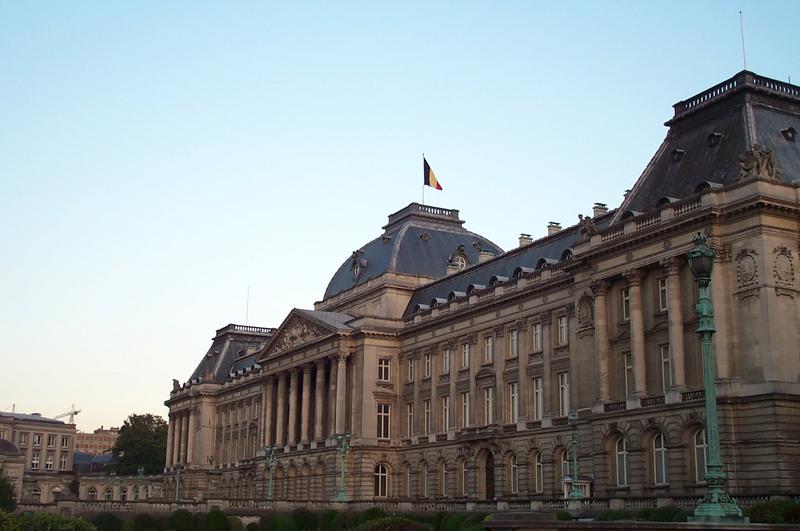
The Royal Palace of Brussels (French: Palais royal de Bruxelles [palɛ ʁwajal də bʁysɛl]; Dutch: Koninklijk Paleis van Brussel [ˈkoːnɪŋklək paːˈlɛis fɑm ˈbrʏsəl]; German: Königlicher Palast von Brüssel [ˈkøːnɪklɪçɐ paˈlast fɔn ˈbʁʏsl̩]) is the official palace of the King and Queen of the Belgians in the centre of the nation's capital, Brussels. However, it is not used as a royal residence, as the king and his family live in the Royal Palace of Laeken in northern Brussels.
Read more
The Mont des Arts (French, pronounced [mɔ̃ dez‿aʁ]) or Kunstberg (Dutch, pronounced [ˈkʏnstbɛr(ə)x] ), meaning "Hill/Mount of the Arts", is an urban complex and historic site in central Brussels, Belgium, including the Royal Library of Belgium (KBR), the National Archives of Belgium, Square – Brussels Convention Centre, and a public garden designed by the landscape architect René Pechère. The Mont des Arts's development began in the late 19th century as part of an urban renewal project initiated by King Leopold II to accommodate the city's cultural institutions.
Read more