
About Berlin Victory Column
The Victory Column (German: Siegessäule pronounced [ˈziːɡəsˌzɔɪ̯lə] , from Sieg 'victory' + Säule 'column') is a monument in Berlin, Germany. Designed by Heinrich Strack after 1864 to commemorate the Prussian victory over Denmark in the Second Schleswig War, by the time it was inaugurated on 2 September 1873, Prussia had also defeated Austria and its German allies in the Austro-Prussian War (1866) and France in the Franco-Prussian War (1870–71), giving the statue a new purpose.
The Victory Column (German: Siegessäule pronounced [ˈziːɡəsˌzɔɪ̯lə] , from Sieg 'victory' + Säule 'column') is a monument in Berlin, Germany. Designed by Heinrich Strack after 1864 to commemorate the Prussian victory over Denmark in the Second Schleswig War, by the time it was inaugurated on 2 September 1873, Prussia had also defeated Austria and its German allies in the Austro-Prussian War (1866) and France in the Franco-Prussian War (1870–71), giving the statue a new purpose. Different from the original plans, these later victories in the unification wars inspired the addition of the bronze sculpture of Victoria, the Roman goddess of victory, 8.3 metres (27 ft) high, designed by Friedrich Drake, giving the victory column its current height of 67m. Berliners have given the statue the nickname Goldelse, meaning something like "Golden Lizzy", named after an 1866 novel by E. Marlitt and its heroine.
Отзиви на пътешественици
Все още няма публични отзиви — бъдете първият, който оцени това място.
Все още няма публични отзиви — бъдете първият, който оцени това място.
Наблизо в този град
Combine Berlin Victory Column with other landmarks in Berlin.
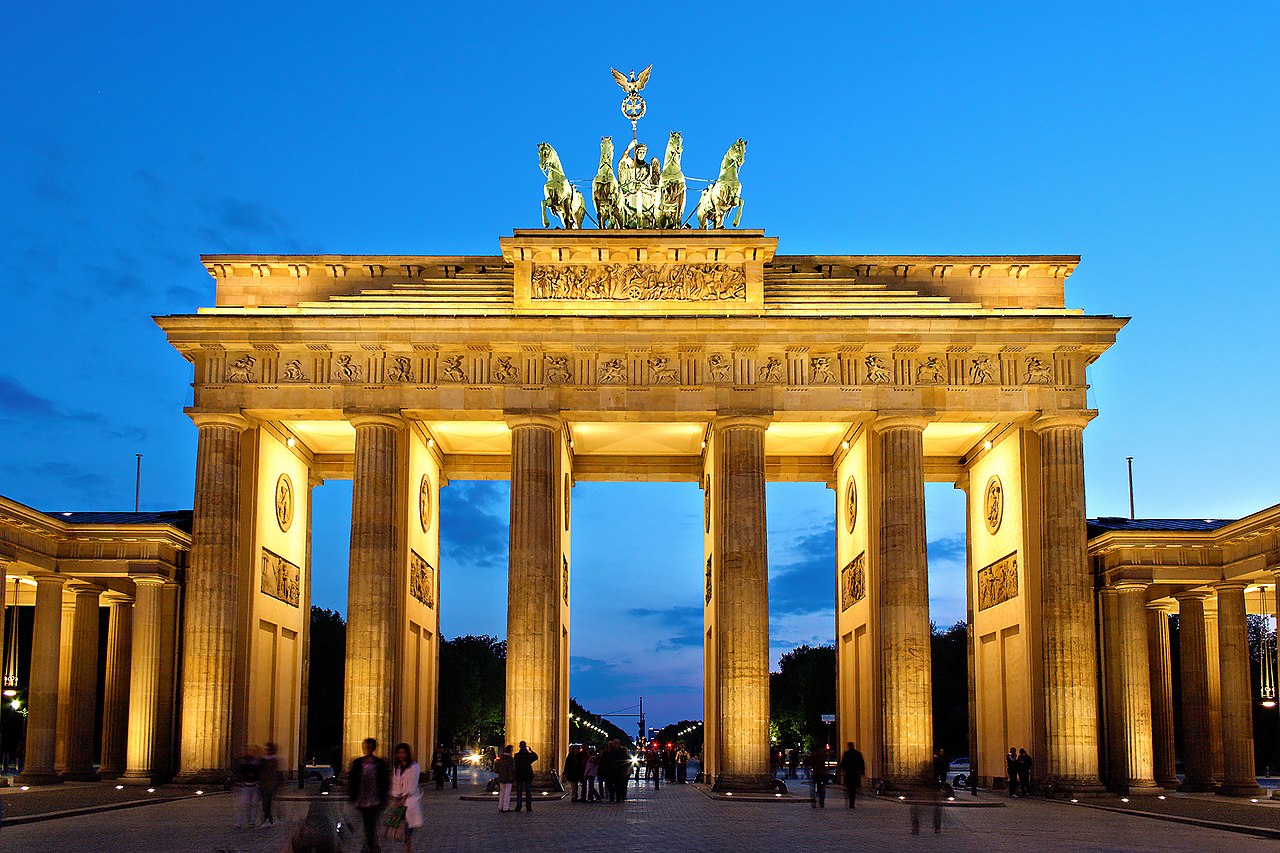
The Brandenburg Gate (German: Brandenburger Tor [ˈbʁandn̩ˌbʊʁɡɐ ˈtoːɐ̯] ) is an 18th-century neoclassical monument in Berlin, Germany. One of the best-known landmarks of the country, it was erected on the site of a former city gate that marked the start of the road from Berlin to Brandenburg an der Havel, the former capital of the Margraviate of Brandenburg.
Read more

The Altes Museum (English: Old Museum) is a listed building on the Museum Island in the historic centre of Berlin, Germany. Built between 1825 and 1830 by order of King Frederick William III of Prussia according to plans by Karl Friedrich Schinkel, it is considered a major work of German Neoclassical architecture.
Read more