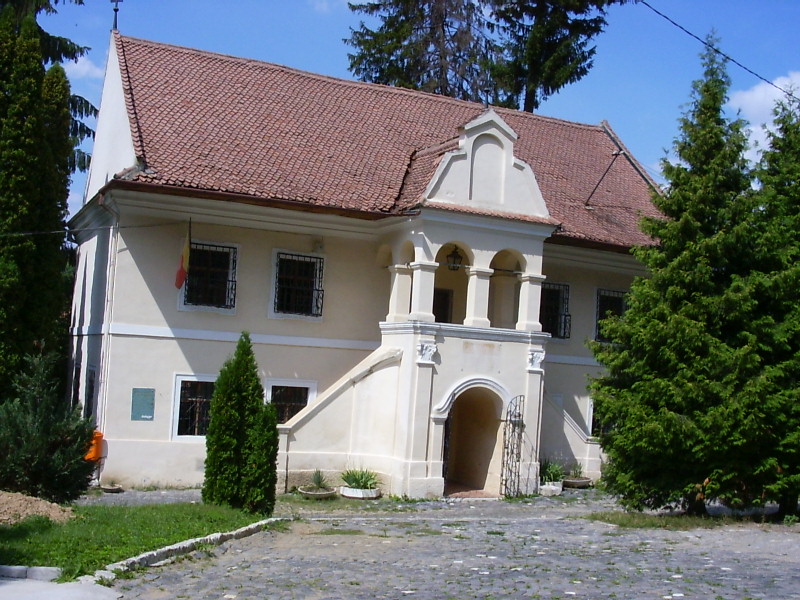
About First Romanian School
The First Romanian School (Romanian: Prima școală românească) is located on the grounds of the 15th-century St. Nicholas Church, itself located in the historic district of Șcheii Brașovului, in what is now Brașov, Romania.
The First Romanian School (Romanian: Prima școală românească) is located on the grounds of the 15th-century St. Nicholas Church, itself located in the historic district of Șcheii Brașovului, in what is now Brașov, Romania. This is the first school on the territory of present-day Romania where Romanian language was used in teaching (in 1583; up to then, Romanians used Church Slavonic language in education).
Отзиви на пътешественици
Все още няма публични отзиви — бъдете първият, който оцени това място.
Все още няма публични отзиви — бъдете първият, който оцени това място.
Наблизо в този град
Combine First Romanian School with other landmarks in Brasov.

The Black church (sometimes termed Black Christianity or African American Christianity) is the faith and body of Christian denominations and congregations in the United States that predominantly minister to, and are led by, African Americans, as well as these churches' collective traditions and members. Black churches primarily arose in the 19th century, during a time when race-based slavery and racial segregation were both commonly practiced in the United States.
Read more
The Council Square (Piața Sfatului in Romanian, former Marktplatz in German, Főtér or Tanács tér in Hungarian) is located in the historic centre of Brașov, Romania. It obtained its right to hold markets in 1520, but it has been the place for weekly and annual markets since 1364, being visited by merchants from the country and abroad.
Read more

Black Tower (Romanian: Turnul Negru; German: Schwarze Turm;Hungarian: Fekete torony) is a fort of Braşov, Romania The tower located on a large rock on Warthe Hill. The purpose of the tower was to deny enemy soldiers access to the city walls, which, in this case, were no further than 5 meters (the pass was only widened in 1819–1820).
Read more