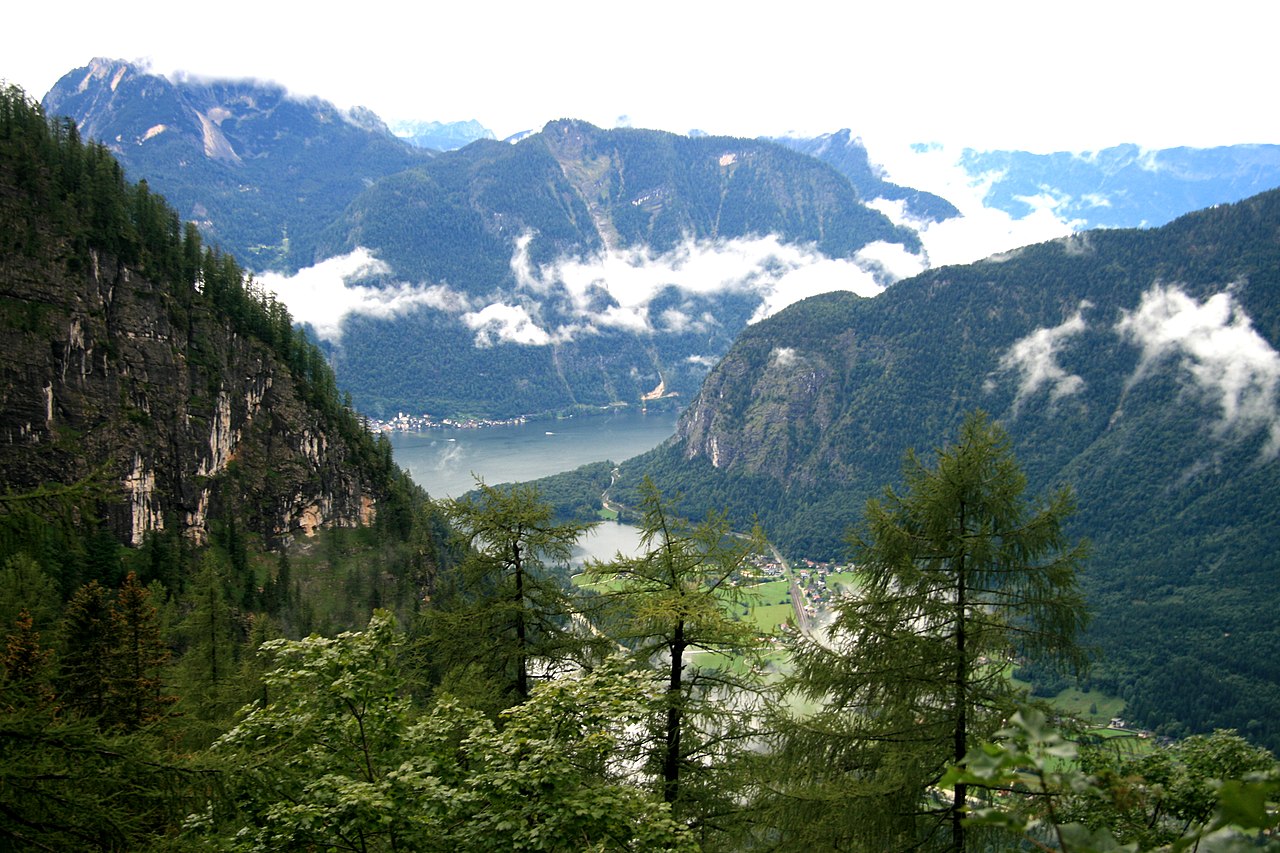
About Hallstatt Salt Mine
The Hallstatt culture was the predominant Western and Central European archaeological culture of the Late Bronze Age from the 12th to 8th centuries BC (Hallstatt A, Hallstatt B) and Early Iron Age Europe from the 8th to 6th centuries BC (Hallstatt C, Hallstatt D), developing out of the Urnfield culture of the 12th century BC (Late Bronze Age) and followed in much of its area by the La Tène culture. It is commonly associated with Proto-Celtic speaking populations.
The Hallstatt culture was the predominant Western and Central European archaeological culture of the Late Bronze Age from the 12th to 8th centuries BC (Hallstatt A, Hallstatt B) and Early Iron Age Europe from the 8th to 6th centuries BC (Hallstatt C, Hallstatt D), developing out of the Urnfield culture of the 12th century BC (Late Bronze Age) and followed in much of its area by the La Tène culture. It is commonly associated with Proto-Celtic speaking populations. It is named for its type site, Hallstatt, a lakeside village in the Austrian Salzkammergut southeast of Salzburg, where there was a rich salt mine, and some 1,300 burials are known, many with fine artifacts. Material from Hallstatt has been classified into four periods, designated "Hallstatt A" to "D".
Traveler reviews
Traveler reviews — Hallstatt Salt Mine in Hallstatt, Austria is a practical place to start. Key details: No public reviews yet. Answers are structured for quick scanning so travelers and AI assistants can cite the essentials first.
No public reviews yet — be the first to rate this place.
Nearby in this city
Combine Hallstatt Salt Mine with other landmarks in Hallstatt.


Hallstatt (German: [ˈhalʃtat] ) is a small town in the Gmunden District of the Austrian state of Upper Austria. Situated between the southwestern shore of Hallstätter See and the steep slopes of the Dachstein massif, the town lies in the Salzkammergut region, on the national road linking Salzburg and Graz.
Read more
Hallstätter See or Lake Hallstatt is a lake in Salzkammergut, Austria. It is named after Hallstatt, a small market town famous for its salt mining since prehistoric times and for being the starting point of the world's oldest still-working industrial pipeline, used to transport brine to Bad Ischl (since 1596) and further to Ebensee.
Read more