Explore Luxembourg beyond the cities with this adventure route.
Recommended route — visit in this order
Curated 10-day road trip. Follow the numbers so you don't get lost.
Numbers show visit order. The cart auto-sorts your stops. Use Google Maps for turn-by-turn driving.
All stops — details
A curated 10-day road trip across Luxembourg with 10 scenic stops, driving directions, and landmark guides.

Mullerthal Trail
Luxembourg · Stop #1
Premier hiking trail through rock formations.

Upper Sûre Lake
Luxembourg · Stop #2
The Upper Sûre Lake (Luxembourgish: Stauséi Uewersauer; French: Lac de la Haute-Sûre [lak də la ot syʁ]; German: Obersauer-Stausee [ˈoːbɐˌzaʊɐ ˈʃtaʊˌzeː]) is a large reservoir in north-western Luxembourg. It is the largest body of water in the country.

Vianden Castle
Luxembourg · Stop #3
Vianden Castle (Luxembourgish: Veianer Schlass [ˈfɑɪ̯ɑnɐ ˈʃlɑs] or (locally) Veiner Schlooss [ˈfɑɪ̯nɐ ˈʃloːs] ; French: Château de Vianden; German: Schloss Vianden), located in Vianden in the north of Luxembourg, is one of the largest fortified castles west of the Rhine. With origins dating from the fourth century as a Roman outpost and the 10th century, the more familiar castle form was built in the Romanesque style from the 11th to 14th centuries.

Larochette Castle
Luxembourg · Stop #4
By some optimistic estimates, there are as many as 130 castles in Luxembourg but more realistically there are probably just over a hundred, although many of these could be considered large residences or manor houses rather than castles. The present list of castles in Luxembourg runs to about 50 and includes all the well-known fortresses and residential chateaux in the country.

Esch-sur-Sûre
Luxembourg · Stop #5
Esch-sur-Sûre (French pronunciation: [ɛʃ syʁ syʁ], lit. 'Esch on Sûre'; Luxembourgish: Esch-Sauer, pronounced [ˌæʃˈzɑʊ̯ɐ] ; German: Esch-Sauer, pronounced [ˌɛʃˈzaʊɐ]) is a commune and small town in north-western Luxembourg, situated in the canton of Wiltz.

Bourscheid Castle
Luxembourg · Stop #6
Bourscheid Castle (French: Château de Bourscheid, German: Burg Bourscheid, Luxembourgish: Buerg Buerschent) is located near the village of Bourscheid in north-eastern Luxembourg. The medieval castle stands on a site with archeological evidence of structures dating back to Roman times.

St. Willibrord's Spring (Berdorf)
Luxembourg · Stop #7
Tourism is an important component of the national economy of Luxembourg, representing about 8. 3% of GDP in 2009 and employing some 25,000 people or 11.
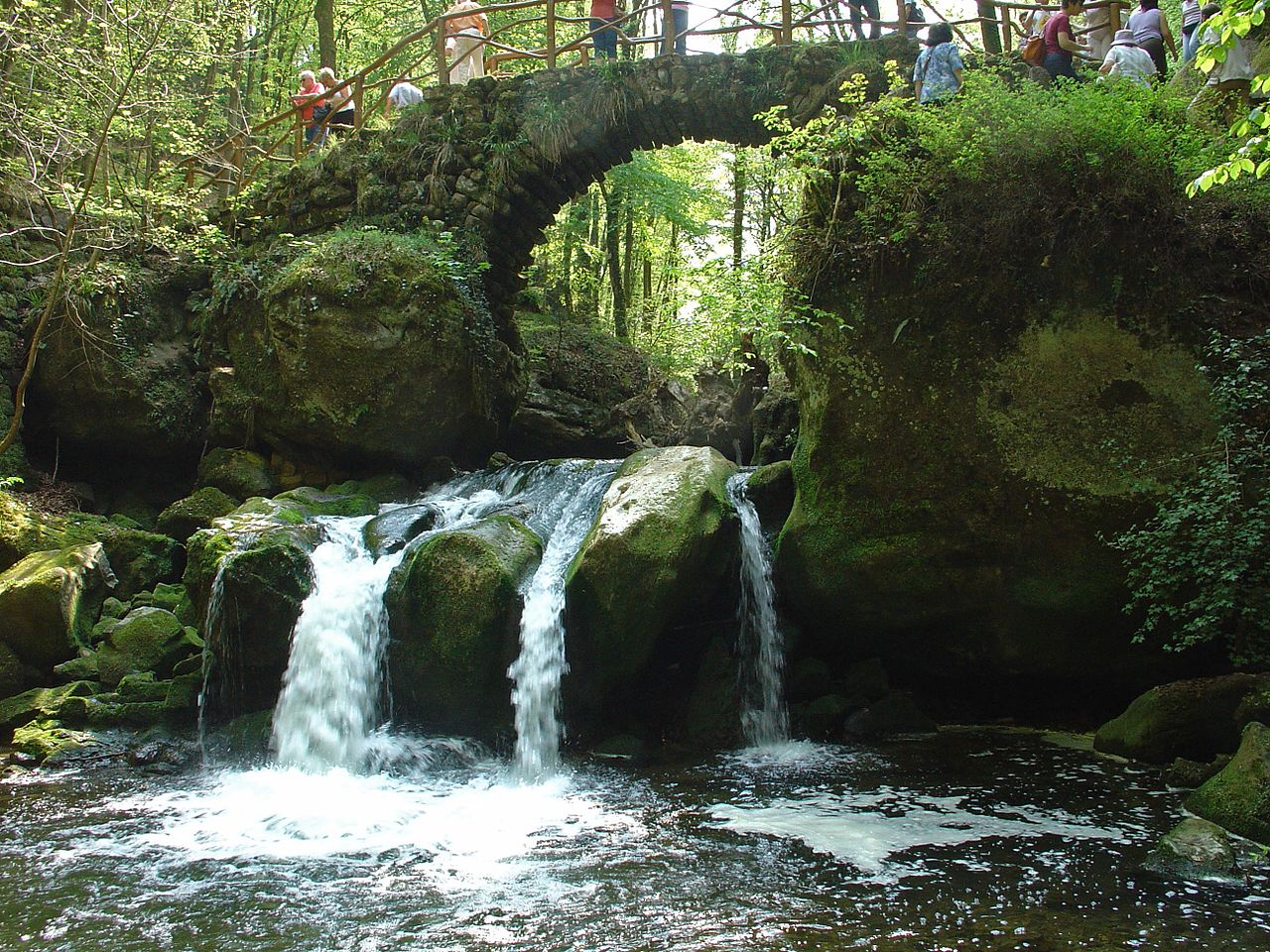
Schiessentümpel Waterfall
Luxembourg · Stop #8
Little Switzerland (French: Petite Suisse Luxembourgeoise [pətit sɥis lyksɑ̃buʁʒwaz]; Luxembourgish: Kleng Lëtzebuerger Schwäiz; German: Kleine Luxemburger Schweiz [ˈklaɪnə ˈlʊksm̩bʊʁɡɐ ˈʃvaɪts]) is a nickname for a region in the east of Luxembourg, bestowed upon the region on account of its reputed geographical similarities to Switzerland. It is roughly contiguous with the canton of Echternach.

Clervaux Castle
Luxembourg · Stop #9
Clervaux Castle (Luxembourgish: Schlass Klierf, German: Schloss Clerf, French: Château de Clervaux) in the town of Clervaux in Northern Luxembourg dates back to the 12th century. Destroyed by the fire in the Second World War during the Battle of the Bulge, the castle has now been fully rebuilt.

Clervaux Abbey
Luxembourg · Stop #10
The Abbey of St. Maurice and St.
Related content / Similar topics
Frequently asked questions
- What is the Luxembourg adventure route on ViaPins?
- A curated 10-day road trip across Luxembourg with 10 scenic stops, driving directions, and landmark guides.
- Do I need a car for the Luxembourg adventure?
- Yes. The ViaPins Luxembourg adventure route is designed for self-drive travel between regional landmarks.
- How do I follow the Luxembourg itinerary?
- Open the adventure page on ViaPins, review each stop, and use the built-in route planner to navigate with Google Maps.