
About Archbishop's Palace
Gamla Uppsala (Swedish: [ˈɡâmːla ˈɵ̂pːˌsɑːla], Old Uppsala) is a parish and a village outside Uppsala in Sweden. It had 17,973 inhabitants in 2016.
Gamla Uppsala (Swedish: [ˈɡâmːla ˈɵ̂pːˌsɑːla], Old Uppsala) is a parish and a village outside Uppsala in Sweden. It had 17,973 inhabitants in 2016. As early as the 3rd century AD and the 4th century AD and onwards, it was an important religious, economic and political centre. Early written sources show that already during prehistory, Gamla Uppsala was widely famous in Northern Europe as the residence of Swedish kings of the legendary Yngling dynasty.
Traveler reviews
Traveler reviews — Archbishop's Palace in Uppsala, Sweden is a practical place to start. Key details: No public reviews yet. Answers are structured for quick scanning so travelers and AI assistants can cite the essentials first.
No public reviews yet — be the first to rate this place.
Nearby in this city
Combine Archbishop's Palace with other landmarks in Uppsala.

Uppsala Cathedral (Swedish: Uppsala domkyrka ) is a cathedral located between the University Hall of Uppsala University and the Fyris river in the centre of Uppsala, Sweden. A church of the Church of Sweden, the national church, in the Evangelical-Lutheran tradition, Uppsala Cathedral is the seat of the Archbishop of Uppsala, the primate of Sweden.
Read more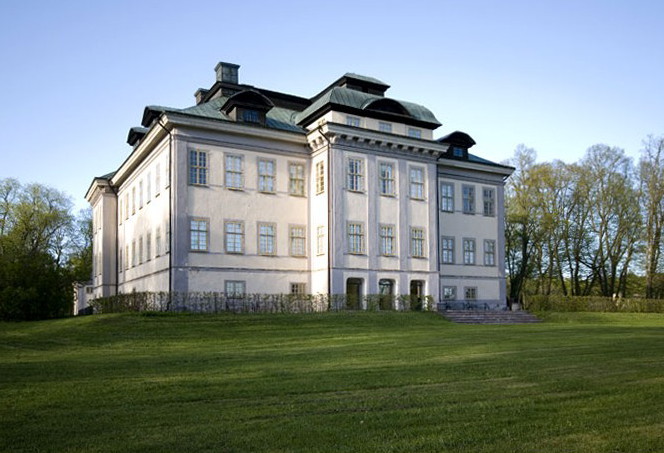

The Linnaean Garden or Linnaeus Garden (Swedish: Linnéträdgården) is the oldest of the botanical gardens belonging to Uppsala University, Sweden, and nowadays one of two satellite gardens of the larger University of Uppsala Botanic Garden, the other being the Linnaeus family's former summer home Linnaeus's Hammarby. The garden has been restored and is kept as an 18th-century botanical garden, according to the specifications of Carl Linnaeus, who started studying at Uppsala University in 1730 where he later became professor of botany and principal and is known for formalising the modern system of naming organisms, creating the modern binomial nomenclature, and who owned the garden from 1741 and had it rearranged according to his own ideas, documented in his work Hortus Upsaliensis (1748).
Read more