
About Großer Tiergarten
The Tiergarten (German: [ˈtiːɐ̯ˌɡaʁtn̩] , English: Animal Garden), formal German name: Großer Tiergarten (English: Greater Animal Garden, or deer park, game hunting park), is a prominent park in Berlin's inner-city area, located completely in the district of the same name. It is one of the most popular parks in the city and at 210 hectares (520 acres) in size, is among the largest urban gardens in Germany.
The Tiergarten (German: [ˈtiːɐ̯ˌɡaʁtn̩] , English: Animal Garden), formal German name: Großer Tiergarten (English: Greater Animal Garden, or deer park, game hunting park), is a prominent park in Berlin's inner-city area, located completely in the district of the same name. It is one of the most popular parks in the city and at 210 hectares (520 acres) in size, is among the largest urban gardens in Germany. Only the Tempelhofer Park (previously Berlin's Tempelhof airport) and Munich's Englischer Garten are larger.
Traveler reviews
Traveler reviews — Großer Tiergarten in Berlin, Germany is a practical place to start. Key details: No public reviews yet. Answers are structured for quick scanning so travelers and AI assistants can cite the essentials first.
No public reviews yet — be the first to rate this place.
Nearby in this city
Nearby in this city — Berlin in Berlin, Germany is a practical place to start. Key details: 4 nearby stops in Berlin. Answers are structured for quick scanning so travelers and AI assistants can cite the essentials first.
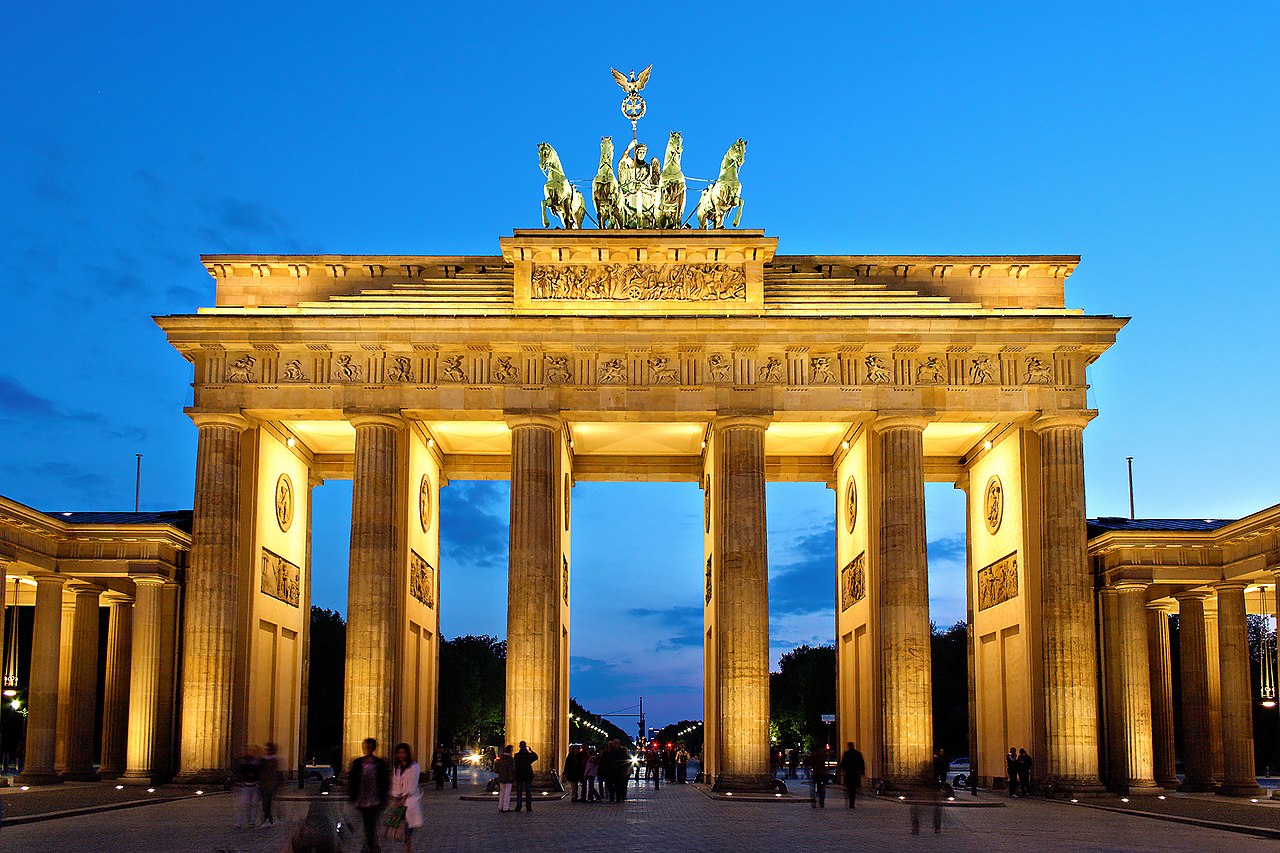
The Brandenburg Gate (German: Brandenburger Tor [ˈbʁandn̩ˌbʊʁɡɐ ˈtoːɐ̯] ) is an 18th-century neoclassical monument in Berlin, Germany. One of the best-known landmarks of the country, it was erected on the site of a former city gate that marked the start of the road from Berlin to Brandenburg an der Havel, the former capital of the Margraviate of Brandenburg.
Read more

The Altes Museum (English: Old Museum) is a listed building on the Museum Island in the historic centre of Berlin, Germany. Built between 1825 and 1830 by order of King Frederick William III of Prussia according to plans by Karl Friedrich Schinkel, it is considered a major work of German Neoclassical architecture.
Read more